

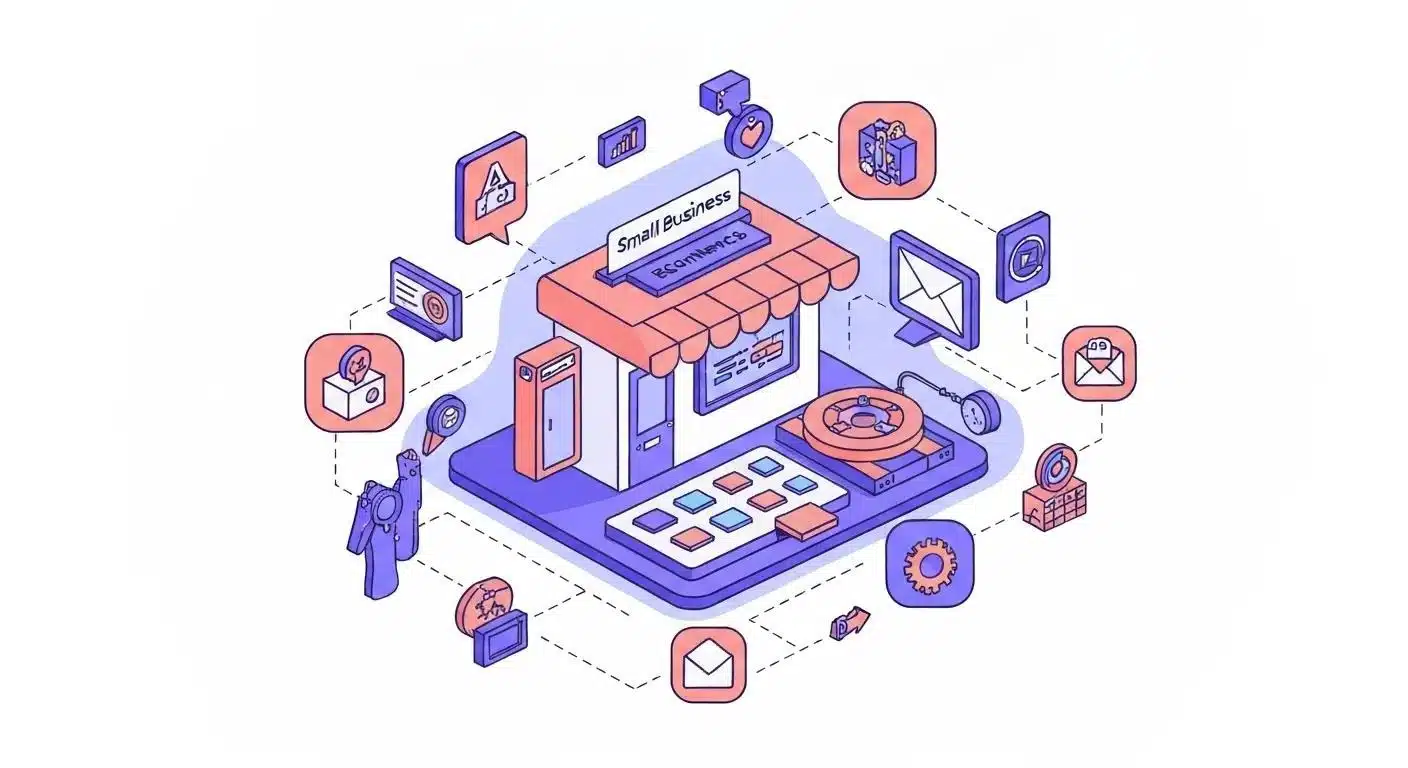
Ultimate Ecommerce Strategy: A Small Business Guide from A-Z
Ecommerce is no longer optional; it’s the backbone of modern commerce. For small businesses, it represents both a challenge and an unprecedented opportunity: the ability to compete with global brands, build direct customer relationships, and scale without traditional retail overheads.
Global retail ecommerce sales are projected to hit $6.3 trillion in 2024 (Statista, 2024). For small business ecommerce, this digital transformation levels the playing field, making success less about size and more about strategy, execution, and customer experience. A well-defined ecommerce strategy is crucial for navigating this landscape.
Consumers expect speed, trust, personalization, and convenience. Meeting these expectations requires more than just a storefront; it requires a cohesive ecommerce strategy that combines marketing, technology, fulfillment, and customer care into one seamless system. Effective ecommerce marketing is at the heart of this system.
This guide walks you from A to Z, covering business models, platforms, operations, marketing, analytics, and beyond, so you can confidently launch, grow, and scale a profitable ecommerce business. It’s designed to be your comprehensive resource for mastering small business ecommerce.
“In today’s digital landscape, a strong online presence isn’t just an advantage for small businesses; it’s a necessity for survival and growth. Ecommerce marketing provides the roadmap to connect with customers, build brand loyalty, and drive sustainable revenue.” – Jorge Leger, Founder and Digital Marketing Consultant, Astound Media.
Quick Navigation
Ecommerce Basics: Models, Benefits, and Challenges

What Is Ecommerce?
At its core, ecommerce means buying and selling goods or services online. For small businesses, ecommerce is more than just setting up a digital storefront; it’s about creating a system that attracts visitors, converts them into customers, and builds loyalty over time. This involves a strategic approach to ecommerce marketing and operations. It’s the digital evolution of retail, offering unparalleled reach and efficiency when executed correctly. Understanding the fundamental principles of ecommerce is the first step towards building a successful online business.
Common Ecommerce Business Models
- B2C (Business-to-Consumer): Selling products directly to end customers. This is the most common model for small and medium-sized businesses (SMBs) venturing into ecommerce, focusing on direct consumer engagement and sales.
- B2B (Business-to-Business): Supplying products or services to other businesses. This can include wholesale, SaaS products, or specialized industrial supplies. B2B ecommerce often involves longer sales cycles and relationship-based selling.
- DTC (Direct-to-Consumer): Bypassing traditional intermediaries like distributors and retailers to sell directly to your audience. This model fosters stronger brand control, direct customer relationships, and higher profit margins.
- C2C (Consumer-to-Consumer): Peer-to-peer marketplaces where individuals sell to each other. Platforms like Etsy and eBay facilitate this model, connecting individual sellers with buyers.
- Subscription/Recurring: Offering products or services on a recurring basis, such as consumables, curated boxes, or membership access. This model provides predictable revenue streams and fosters customer loyalty through ongoing value.
Benefits of Ecommerce for SMBs
- Global Reach: Sell to customers anywhere, anytime, breaking geographical barriers and tapping into international markets. This expands your potential customer base exponentially compared to a physical store.
- Lower Costs: Reduced overhead compared to brick-and-mortar stores, such as rent, utilities, and staffing, allowing for more competitive pricing and higher profit margins.
- 24/7 Sales: Your online store is always open, driving sales even while you sleep and catering to diverse customer schedules and time zones.
- Data-Driven Insights: Track, analyze, and optimize every customer interaction, leading to more effective ecommerce marketing campaigns and a deeper understanding of customer behavior.
- Scalability: Start small and expand rapidly with the right systems and a robust ecommerce strategy. Ecommerce allows for flexible scaling of operations without the constraints of physical space.
- Enhanced Customer Experience: Offer personalized recommendations, convenient purchasing options, and efficient customer support, leading to higher satisfaction and loyalty.
Challenges SMBs Face
- Intense Competition: Competing with established brands and a crowded online marketplace requires a unique value proposition and superior customer experience.
- Building Trust and Credibility: As a lesser-known business, establishing trust is paramount. This is often addressed through social proof, transparent policies, and excellent customer service.
- Logistics and Fulfillment: Managing inventory, shipping, and returns efficiently to meet customer expectations for speed and accuracy can be complex and costly.
- Evolving Customer Expectations: Consumers demand speed, personalization, seamless service, and ethical practices. Staying ahead of these evolving expectations is a continuous challenge in modern small business ecommerce.
- Technical Expertise: Navigating website development, platform management, and digital marketing tools requires a certain level of technical understanding or the willingness to invest in expertise.
Ecommerce Readiness Framework for SMBs
Before diving into platforms and strategies, small businesses should assess their readiness for ecommerce growth. Jumping in without the proper foundation often leads to costly mistakes. Use the following checklist to evaluate whether you’re prepared to scale:
Readiness Checklist:
- Product-Market Fit: Do you have at least one product or offer with consistent demand?
- Operational Capacity: Can you handle a 20–30% spike in monthly orders without significant disruption?
- Acquisition Channel: Do you already have one reliable way to acquire new customers (e.g., referrals, social media, local sales)?
- Financial Preparedness: Can you invest in inventory, marketing, and technology without jeopardizing cash flow?
- Support Systems: Do you have a plan for customer service, fulfillment, and returns that scales with growth?
If you score “yes” on most of these, you’re ready to move into platform selection and execution. If not, address these gaps first to avoid scaling problems later.
Building Your Ecommerce Foundation

Choosing the Right Platform
Your ecommerce platform is the bedrock of your online business, determining your flexibility, scalability, and marketing capabilities. Selecting the right one is a foundational step in your ecommerce strategy. Consider factors like ease of use, cost, available features, integration capabilities, and scalability as your business grows.
Comparison Table – Leading Platforms for SMBs
| Platform | Best For | Key Features | Pricing (Starting) | Ease of Use | Scalability |
|---|---|---|---|---|---|
| Shopify | All-around, scalable | User-friendly interface, robust themes, extensive app store, integrated payments, and strong support. | $29/mo | Very High | High |
| WooCommerce | WordPress users, highly customizable | Open-source, highly customizable, with a vast plugin ecosystem and full control over your store. Very strong SEO strategy implementation capabilities. |
Free + hosting costs | Medium (requires WordPress knowledge) | High |
| BigCommerce | Growing brands, B2B | Strong SEO capabilities, scalable architecture, no transaction fees, and built-in features. | $29/mo | Medium | Very High |
| Squarespace | Visual-first brands, service businesses | Elegant templates, intuitive drag-and-drop editor, built-in marketing tools, all-in-one solution. | $23/mo | Very High | Medium |
| Wix Ecommerce | Beginners, small businesses | Drag-and-drop interface, easy to start, suitable for smaller catalogs, good for service-based businesses. | $27/mo | Very High | Medium |
Website Essentials: Speed, Mobile, UX
A fast, mobile-friendly, and intuitive website is non-negotiable for successful small business ecommerce. These elements directly impact user experience (UX), search engine rankings, and ultimately, conversion rates. Investing in a well-optimized website is a critical part of your overall ecommerce strategy.
- Mobile-first Design: Over 59% of ecommerce traffic comes from mobile devices (Statista, 2024), making a seamless mobile experience paramount. Ensure your site is responsive and easy to navigate on smaller screens.
- Page Speed Optimization: A 1-second delay in page load time can lead to a 7% reduction in conversions (Think With Google). Optimize images by compressing them without sacrificing quality, leverage browser caching, minimize HTTP requests, and choose a reliable hosting provider. Tools like Google PageSpeed Insights can help identify areas for improvement.
- Intuitive Navigation: Users should be able to find what they’re looking for quickly and easily. Implement clear categories, a prominent search bar, and a logical site structure.
- Trust Signals: Implement SSL certificates to secure transactions, display customer reviews and testimonials prominently, maintain clear return and privacy policies, and ensure contact information is easily accessible. These elements build confidence and reduce friction in the buying process.
- Accessibility: Ensure your website is accessible to users with disabilities by following WCAG guidelines. This broadens your audience and demonstrates inclusivity.
Product Page Best Practices
Your product pages are where the buying decision happens. Optimize them for conversion with compelling content, high-quality visuals, and clear calls to action. This is a crucial element of your ecommerce marketing efforts.
- Benefits-First Copywriting: Focus on how your product solves customer problems or improves their lives, rather than just listing features. Use persuasive language that resonates with your target audience.
- High-Quality Media: Use professional, high-resolution photos from multiple angles, product videos demonstrating usage, and zoom functionality to showcase your products effectively. Consider 360-degree views for a more immersive experience.
- Customer Reviews & User-Generated Content (UGC): Incorporate customer reviews, ratings, and UGC (photos/videos from customers) to build social proof and authenticity. This is a powerful trust signal.
- Clear and Prominent Calls to Action (CTAs): Make your “Add to Cart” or “Buy Now” buttons highly visible, using contrasting colors and action-oriented text.
- Detailed Product Information: Provide comprehensive details, including specifications, dimensions, materials, care instructions, and sizing charts where applicable.
- Schema Markup: Implement schema markup to help search engines understand your product details (price, availability, reviews), potentially leading to rich snippets in search results and improved visibility.
- Urgency and Scarcity: Use elements like “Limited Stock” or “Sale Ends Soon” sparingly and truthfully to encourage immediate purchase decisions.
Operations, Payments, and Fulfillment
Ecommerce success depends on more than just marketing; efficient operations define the customer experience and are a critical part of your ecommerce strategy. Streamlining these processes ensures customer satisfaction and operational efficiency.
Inventory & Order Management
- Integrated Inventory Management: Start lean with integrated inventory management tools to track stock levels accurately across all sales channels. This prevents overselling and manages stockouts effectively.
- Real-time Syncing: Ensure inventory levels are synced in real-time across your website, marketplaces, and any physical stores to maintain accurate stock counts.
- Processing Workflow: Establish a straightforward workflow for receiving, processing, and fulfilling orders to minimize errors and delays. Automate where possible.
- Demand Forecasting: Utilize historical sales data and market trends to forecast demand, ensuring you have adequate stock without overstocking.
Payments
- Multiple Payment Gateways: Offer a variety of payment options to cater to diverse customer preferences. Accept major credit cards, PayPal, and popular digital wallets (Apple Pay, Google Pay, etc.).
- Secure Payment Processing: Ensure all payment processing is safe and compliant with industry standards (e.g., PCI DSS). Use reputable payment gateways to build customer trust.
- Transparent Fees: Clearly communicate any transaction fees or additional charges to avoid surprises and maintain customer confidence.
- Fraud Prevention: Implement fraud detection tools and strategies to protect your business from fraudulent transactions.
Shipping & Logistics
- Diverse Shipping Options: Offer a range of shipping options, including standard, express, and local pickup/delivery, to cater to different customer needs and urgency levels.
- Clear Delivery Timeframes and Tracking: Offer transparent delivery timeframes and provide real-time tracking information to reduce cart abandonment and manage customer expectations.
- Shipping Cost Strategy: Determine a competitive shipping cost strategy, whether it’s flat-rate, weight-based, or free shipping thresholds.
- Third-Party Logistics (3PL): Consider partnering with 3PL providers as your business scales. They can handle warehousing, picking, packing, and shipping efficiently, allowing you to focus on growth.
- International Shipping: If expanding globally, understand customs regulations, duties, and taxes to provide a smooth international shipping experience.
Returns Management
- Customer-Friendly Return Policy: Develop a transparent, fair, and customer-friendly return policy. A good return policy can significantly increase conversion rates and build customer loyalty.
- Streamlined Return Process: Make the return process easy for customers. Offer options like pre-paid return labels and clear instructions.
- Automated Returns: Automate return label generation and processing where possible to streamline the customer experience and reduce administrative burden.
- Analyze Return Data: Track return reasons to identify product issues or areas for improvement in product descriptions or quality control.
Cost-to-Serve Analysis for Small Business Ecommerce
One often-overlooked factor in ecommerce operations is understanding your cost-to-serve (CTS), the total cost of fulfilling a customer order from click to delivery. This goes beyond product cost and shipping fees to include packaging, labor, storage, transaction fees, and even return handling.
A simplified formula for CTS:
CTS per Order = (Fulfillment Costs + Shipping Costs + Packaging + Transaction Fees + Returns Handling) ÷ Total Orders
Why it matters:
- Margin Clarity: By knowing CTS, you avoid underpricing products or offering “free shipping” that actually erodes profit.
Smarter Promotions: If you know CTS, you can confidently offer discounts or bundles without cutting into margins.
Scaling Decisions: CTS helps determine when it’s time to outsource fulfillment to a 3PL, negotiate shipping contracts, or automate parts of the workflow.
Pro Tip: Benchmark CTS regularly. Studies suggest that ecommerce logistics costs typically range from 11–15% of net sales for SMBs (Shopify, 2023). Tracking your own ratio helps ensure profitability as you scale.
Hidden Costs & Pitfalls to Watch For
Many SMBs underestimate the actual costs of ecommerce, which can erode margins if not planned for. Watch for these common pitfalls:
- Payment Processing Fees: Card processors typically take 2.9% + $0.30 per transaction, which adds up quickly. Build this into your pricing strategy.
- Returns & Refunds: Free returns can boost conversions, but they also eat into margins if return rates are high. Track reasons for returns to reduce them over time.
- Shipping Costs: Offering free shipping without considering the average order value (AOV) versus shipping expenses can significantly impact profitability.
- Silent Churn in Email Marketing: Inactive subscribers can hurt deliverability and skew performance data. Regularly clean your lists.
- Platform & App Creep: Monthly SaaS fees for apps, plugins, and integrations can quickly add up. Audit your tool stack quarterly.
Proactively managing these costs protects profitability and keeps your ecommerce business sustainable.
Driving Traffic: Core Ecommerce Marketing Channels

This section delves into the heart of ecommerce marketing, exploring the most effective channels to attract potential customers to your online store. A multi-channel approach is often the most effective for reaching a diverse audience.
Prioritization Matrix for SMB Ecommerce Marketing
With so many potential channels and tactics, SMBs can quickly feel overwhelmed. A simple Impact vs. Resources prioritization matrix helps identify what to focus on first.
| Impact vs. Resources | High Resources | Low Resources |
|---|---|---|
| High Impact | Strategic Investments (SEO, CRO, influencer partnerships, omnichannel setup) | Quick Wins (abandoned cart emails, mobile speed fixes, basic product page improvements) |
| Low Impact | Resource Traps (complex redesigns with little ROI, vanity projects) | Nice-to-Haves (minor design tweaks, social vanity metrics) |
By mapping your initiatives into these four quadrants, you can allocate resources efficiently, double down on high-value activities, and avoid wasting time on projects that won’t move the needle.
SEO for Store Growth
Search Engine Optimization (SEO) is fundamental for sustainable, organic traffic. A strong SEO foundation is key to long-term small business ecommerce success, driving qualified leads without ongoing ad spend.
- Keyword Research: Identify relevant keywords, including broad category terms (e.g., “running shoes”) and specific long-tail phrases (e.g., “best lightweight running shoes for marathon training”) that your target audience uses. Tools like Semrush or Ahrefs are invaluable here.
- On-Page Optimization: Optimize product titles, descriptions, meta descriptions, and image alt text with target keywords. Ensure content is unique, valuable, and user-focused.
- Category Page Optimization: Optimize category pages with descriptive copy, helpful guides, and effective filtering options to improve search visibility and user experience. These pages often target broader keywords.
- Technical SEO: Ensure your site has a clear, logical structure, fast loading times (Core Web Vitals), a mobile-friendly design, and an accurate sitemap submitted to search engines. Implement HTTPS for security.
- Content Marketing: Create valuable content such as blog posts, buying guides, comparison articles, and seasonal checklists that attract organic traffic, answer customer questions, and establish your expertise. This content can also be used for email and social media.”- Jorge Leger, Founder and
- Link Building: Earn high-quality backlinks from reputable websites to improve your site’s authority and search rankings. This can be achieved through guest blogging, partnerships, and creating shareable content.
Paid Advertising
Paid channels offer immediate visibility and can be highly targeted to reach specific customer segments. They are essential for driving traffic quickly and testing marketing messages.
- Google Search & Shopping Ads: Capture high-intent shoppers actively searching for your products. Shopping ads are particularly effective for product-based ecommerce businesses, displaying product images, prices, and store names directly in search results.
- Meta Ads (Facebook & Instagram): Utilize powerful targeting options to reach specific demographics, interests, and behaviors. Retargeting campaigns are highly effective for re-engaging users who have visited your site but haven’t purchased.
- TikTok Ads: Reach a younger, engaged demographic with creative video content. TikTok offers unique ad formats and targeting capabilities for driving brand awareness and conversions.
- Pinterest Ads: Leverage visual discovery to showcase products to users actively planning purchases and seeking inspiration. Pinterest is a strong platform for visually appealing products.
- Programmatic Advertising: Utilize automated platforms to buy digital ad space across various websites and apps, targeting specific audiences with precision.
- Budgeting and Bidding: Carefully manage your ad spend, set appropriate bids, and continuously monitor performance to optimize campaigns for Return on Ad Spend (ROAS).
Email & SMS Marketing
Direct communication channels like email and SMS are powerful for nurturing leads, driving repeat purchases, and building customer loyalty. These are cornerstones of effective ecommerce marketing and customer retention.
- List Building Strategies: Implement pop-ups, signup forms, and lead magnets (e.g., discounts, free guides) to grow your email and SMS subscriber lists ethically.
- Core Automated Flows: Implement essential automated sequences:
- Welcome Series: Introduce your brand, offer an incentive, and guide new subscribers towards their first purchase.
- Abandoned Cart Reminders: Recover lost sales by reminding customers about items left in their cart, often with a small discount.
- Post-Purchase Follow-ups: Thank customers, provide shipping updates, request reviews, and suggest related products.
- Win-Back Campaigns: Re-engage inactive subscribers with special offers or surveys to understand their preferences.
- Segmentation and Personalization: Divide your audience based on Recency, Frequency, Monetary value (RFM), lifecycle stage, purchase history, and engagement levels for more personalized and relevant messaging.
- Promotional Campaigns: Run targeted campaigns for sales, new product launches, holidays, and special events.
- Deliverability Best Practices: Maintain good list hygiene by regularly cleaning your list, authenticating your sending domains (SPF, DKIM, DMARC), and sending relevant, engaging content to ensure your messages reach the inbox, not the spam folder.
- SMS Marketing: Utilize SMS for time-sensitive offers, order updates, and high-priority notifications. Ensure compliance with regulations like TCPA.
Social Commerce & Influencer Marketing
Leverage social platforms to drive sales directly, build brand advocacy, and connect with your audience in authentic ways.
- Native Shopping Features: Utilize integrated shopping features on platforms like Instagram Shopping, Facebook Shops, TikTok Shop, and Pinterest Buyable Pins to allow seamless purchasing directly within the social app.
- Engaging Social Content: Create visually appealing and interactive content (videos, stories, reels, live streams) that showcases your products in action and resonates with your target audience.
- User-Generated Content (UGC): Encourage and actively curate UGC by running contests, creating branded hashtags, and featuring customer photos/videos. UGC builds immense trust and relatability. BrightLocal research indicates that 88% of consumers trust online reviews as much as personal recommendations.
- Influencer Marketing: Partner with influencers whose audience aligns with your target market. Focus on micro-influencers for authentic endorsements and measurable ROI, especially within niche markets.
- Community Building: Foster a sense of community around your brand by engaging with followers, responding to comments and messages promptly, and creating spaces for discussion.
The "Conversion Velocity Score"
Beyond standard conversion rates, we’ve observed that the *speed* at which a visitor converts is a critical, often overlooked, indicator of intent and potential lifetime value. We call this the Conversion Velocity Score (CVS).
How it Works: CVS measures the time elapsed from a visitor’s first touchpoint to their first purchase. We categorize this into:
Velocity 1 (Instant): 0-24 hours (High intent, impulse buys, strong immediate need)
Velocity 2 (Rapid): 24-72 hours (Considered options, responsive to targeted offers)
Velocity 3 (Deliberate): 3-14 days (Research-heavy, comparison shoppers, value-driven)
Velocity 4 (Long-Term): 14+ days (Brand building, complex decisions, relationship-focused)
Why it Matters for SMBs: Understanding your dominant CVS can inform your marketing spend and retention strategies. For example, businesses with a high proportion of Velocity 1 customers might focus on flash sales and retargeting, while those with Velocity 3 customers might invest more in detailed content and comparison tools. Our internal analysis of anonymized SMB data shows that businesses optimizing for their dominant CVS see an average 15% uplift in Customer Lifetime Value (LTV).
Converting Traffic: CRO & Retention

Attracting visitors is only half the battle; converting them into customers and retaining them is crucial for sustainable growth in small business ecommerce. Conversion Rate Optimization (CRO) and robust retention strategies are key.
Conversion Rate Optimization (CRO)
CRO is the systematic process of increasing the percentage of website visitors who take a desired action, such as making a purchase. It involves understanding user behavior and making data-driven improvements.
- CRO Testing Frameworks: Utilize methodologies like PIE (Problem, Idea, Execution) or ICE (Impact, Confidence, Ease) to prioritize and test website improvements. This ensures you focus on changes most likely to yield results.
- A/B Testing: Test variations of website elements (headlines, CTAs, images, page layouts) to determine which performs best. Tools like Google Optimize (soon to be sunset, consider alternatives like VWO or Optimizely), or built-in platform features can facilitate this.
- User Behavior Analysis: Utilize tools like Hotjar or Crazy Egg to analyze heatmaps, session recordings, and user surveys, thereby gaining insights into how visitors interact with your site and pinpointing friction points.
- Personalization: Tailor website content, product recommendations, and offers based on user behavior, demographics, or past purchases.
- Streamlining the Checkout Process: Simplify the checkout flow by reducing the number of steps, offering guest checkout, and clearly displaying shipping costs and delivery times early on.
- Exit-Intent Popups: Implement exit-intent popups that trigger when a user is about to leave the site, offering a last-minute incentive or a chance to capture their email address.
Customer Retention Strategies
Acquiring new customers is significantly more expensive than retaining existing ones. Focus on building loyalty and encouraging repeat purchases.
- Loyalty Programs: Reward repeat customers with points, exclusive discounts, early access to new products, or tiered membership benefits.
- Personalized Post-Purchase Communication: Continue engaging customers after a sale with personalized thank-you notes, relevant product recommendations, and helpful content related to their purchase.
- Exceptional Customer Service: Provide prompt, helpful, and friendly customer support across multiple channels. Positive service experiences build trust and encourage repeat business.
- Gathering Feedback: Actively solicit customer feedback through surveys, reviews, and direct outreach. Use this feedback to improve products and services.
- Subscription Models: For relevant products, consider offering subscription options for recurring revenue and enhanced customer convenience.
- Building Community: Foster a sense of belonging through social media groups, forums, or exclusive content for loyal customers.
- Cart Abandonment Recovery: Implement targeted email or SMS campaigns to remind customers about items left in their cart. According to the Baymard Institute, the average online cart abandonment rate is around 70%, highlighting the significant potential for recovery.
The "Loyalty Ladder Framework"
We’ve developed the Loyalty Ladder Framework to help SMBs visualize and strategize customer progression beyond a single purchase. It moves beyond simple repeat purchases to cultivate true brand advocates.
The Rungs of the Ladder:
- First-Time Buyer: The initial conversion. Focus on a positive onboarding experience and immediate value.
- Repeat Customer: Made 2-4 purchases. Offer incentives for continued engagement and introduce them to your brand’s broader offerings.
- Brand Enthusiast: Made 5+ purchases or significant spend. Provide exclusive perks, early access, and personalized recommendations.
- Advocate: Actively refers new customers, leaves reviews, and engages with brand content. Reward advocacy with exclusive benefits and recognition.
SMB Application: By mapping customers to these rungs, businesses can tailor communication and offers. For instance, a survey of SMBs using this framework revealed that targeting “Brand Enthusiasts” with exclusive content and “Advocates” with referral bonuses resulted in a 25% increase in organic customer acquisition and a 10% boost in average order value from repeat buyers.
Advanced Ecommerce Tactics

As your business grows, incorporating advanced strategies can unlock new levels of efficiency and customer engagement, refining your overall ecommerce strategy and driving significant growth.
AI-Driven Personalization
Leveraging Artificial Intelligence (AI) allows for hyper-personalization at scale, anticipating customer needs and delivering tailored experiences that boost engagement and sales. McKinsey research indicates that personalization can deliver five to eight times the ROI on marketing spend and lift sales by 10% or more.
- Personalized Product Recommendations: Utilize AI algorithms to analyze browsing history, purchase data, and user behavior, and suggest relevant products on your website, in emails, and in ads.
- Dynamic Website Content: Tailor website content, offers, and even layouts based on individual user profiles or segments to create a more relevant and engaging experience.
- Predictive Analytics: Utilize AI to predict customer behavior, such as churn risk or likelihood to purchase, enabling proactive engagement strategies.
- AI-Powered Chatbots: Implement chatbots for instant customer support, answering FAQs, guiding users, and even assisting with purchases, improving efficiency and customer satisfaction.
- Personalized Email Campaigns: Use AI to optimize email send times, subject lines, and content for individual subscribers, increasing open and click-through rates.
Omni-channel Consistency
An omnichannel approach ensures a unified and seamless brand experience across all customer touchpoints, both online and offline. This integrated strategy is vital for modern retail.
- Unified Customer Data: Integrate customer data from all channels (website, social media, email, physical store, customer service) into a single view to understand the complete customer journey.
- Consistent Branding: Maintain consistent brand messaging, visual identity, and tone of voice across all platforms.
- Synchronized Inventory: Ensure real-time inventory visibility across all sales channels to prevent stockouts and allow for options like buy online, pick up in-store (BOPIS).
- Cross-Channel Promotions: Run integrated marketing campaigns that span multiple channels, encouraging customers to engage with your brand wherever they are.
- Seamless Transitions: Allow customers to start a journey on one channel and seamlessly continue it on another (e.g., adding items to a cart on mobile and completing the purchase on desktop).
Subscriptions & Memberships
Recurring revenue models offer predictable income, increased customer lifetime value (LTV), and enhanced customer loyalty.
- Product Subscriptions: Offer regular delivery of consumables (e.g., coffee, pet food) or curated boxes based on customer preferences.
- Membership Programs: Provide exclusive benefits, content, or community access for a recurring fee.
- Tiered Offerings: Create different subscription or membership tiers with varying levels of benefits to cater to different customer needs and budgets.
- Customer Retention Focus: Subscription models inherently encourage retention by providing ongoing value and convenience.
Sustainable & Ethical Ecommerce Practices
Modern consumers increasingly favor businesses that align with their values. For SMBs, embracing sustainability and ethics isn’t just good practice; it’s a competitive advantage.
Practical Steps for SMBs:
- Eco-Friendly Packaging: Switch to recyclable or compostable packaging. Highlight this on product pages.
- Transparent Sourcing: Share where and how your products are made, especially if working with artisans or ethical suppliers.
- Carbon-Neutral Shipping: Partner with logistics providers that offer carbon offsetting or allow customers to opt in at checkout.
- Community Impact: Showcase local initiatives, charitable partnerships, or give-back programs that resonate with your audience.
Consumers are willing to pay more for brands that reflect their values. Incorporating sustainability into your ecommerce marketing builds loyalty while differentiating your small business in a crowded market.
The Flywheel Effect
Inspired by inbound marketing principles, the Flywheel Effect focuses on a continuous cycle of Attract → Engage → Convert → Retain → Advocate. Satisfied customers become your best marketers, fueling further growth.
- Attract: Draw in potential customers with valuable content and compelling offers.
- Engage: Interact with prospects and customers in meaningful ways, building relationships and trust.
- Convert: Turn engaged prospects into paying customers through a smooth and persuasive buying process.
- Retain: Delight existing customers with excellent service, personalized experiences, and ongoing value to encourage repeat purchases.
- Advocate: Empower happy customers to become brand advocates by sharing their positive experiences through reviews, referrals, and social media.
The "Advocacy Multiplier"
We’ve observed that not all customer advocacy is equal. The Advocacy Multiplier quantifies the impact of different advocacy actions on new customer acquisition. This goes beyond simple referral programs.
The Multiplier Factors:
- Direct Referral (Code/Link): 1.5x (Directly attributable new customer)
- Public Review (Verified Purchase): 1.2x (Influences multiple potential buyers)
- Social Media Share (with product tag): 1.1x (Broader reach, less direct attribution)
- User-Generated Content (UGC) Submission: 1.3x (High trust, visual proof)
- Community Forum/Group Contribution: 1.0x (Niche influence, builds brand authority)
SMB Application: By tracking these actions and applying the multiplier, SMBs can strategically incentivize the most impactful forms of advocacy. Anonymized data suggests that businesses actively cultivating UGC and verified reviews see their CAC decrease by an average of 18%, as these forms of advocacy provide strong social proof that reduces the need for expensive paid acquisition.
Analytics & KPIs: What are they and what's their role?

Data is your compass in the complex world of ecommerce marketing. Understanding and tracking key metrics allows you to make informed decisions, optimize your performance, and demonstrate ROI.
Core Metrics to Track
- Customer Acquisition Cost (CAC): The total cost of sales and marketing efforts needed to acquire a new customer.
- Return on Ad Spend (ROAS): Revenue generated for every dollar spent on advertising.
- Average Order Value (AOV): The average amount spent each time a customer places an order.
- Customer Lifetime Value (LTV): The total revenue a business can expect from a single customer account throughout their relationship. Aim for LTV > CAC.
- Conversion Rate (CR): The percentage of website visitors who complete a desired action (e.g., make a purchase).
- Cart Abandonment Rate: The percentage of online shoppers who add items to their shopping cart but leave without completing the purchase.
- Repeat Purchase Rate: The percentage of customers who have made more than one purchase.
- Website Traffic: The number of visitors to your site, broken down by source (organic, paid, direct, referral, social).
- Bounce Rate: The percentage of visitors who navigate away from the site after viewing only one page.
Benchmarks and Goals
While industry benchmarks vary, here are some general targets to aim for:
- Conversion Rate: 1–3% is a common benchmark, but higher is achievable with optimization.
- ROAS: A 4:1 ratio (meaning $4 in revenue for every $1 spent on ads) is often considered a good starting point.
- Cart Abandonment Rate: Aim to keep this below 70% (Baymard Institute data).
- LTV: Aim for an LTV that is at least 3x your CAC.
Remember to set realistic goals based on your specific industry, business model, and stage of growth. Continuously monitor these metrics against your targets.
Dashboards and Reporting
Utilize analytics platforms to create custom dashboards that provide a clear overview of your key performance indicators (KPIs). Regularly scheduled reports help track progress and identify trends.
- Google Analytics 4 (GA4): A powerful tool for tracking website traffic, user behavior, conversions, and ecommerce performance.
- Platform-Specific Analytics: Leverage the built-in analytics provided by your ecommerce platform (e.g., Shopify Analytics, WooCommerce reports).
- Marketing Channel Dashboards: Use tools like Google Data Studio (Looker Studio) or specialized reporting software to consolidate data from various marketing channels (Google Ads, Meta Ads, Email platforms) into a single view.
- Key Areas to Monitor: Focus on Acquisition (where traffic comes from), Conversion (how effectively you turn visitors into customers), Retention (how well you keep customers coming back), and Product Performance (which products are selling best).
Attribution Frameworks
Understand how different marketing touchpoints contribute to conversions. Various attribution models exist, each with its pros and cons:
- First-Click: Attributes 100% of the conversion value to the first touchpoint a customer interacted with.
- Last-Click: Attributes 100% of the conversion value to the last touchpoint before conversion. This is often the default, but it can undervalue earlier touchpoints.
- Linear: Distributes credit equally across all touchpoints in the customer journey.
- Time Decay: Gives more credit to touchpoints that occurred closer in time to the conversion.
- Data-Driven Attribution (DGA): Uses machine learning to assign credit based on actual contribution to conversions. This is increasingly the recommended model in GA4.
Choosing the right attribution model helps you allocate your marketing budget more effectively by understanding which channels are truly driving results.
Case Studies

Real-world examples demonstrate the power of a well-executed ecommerce strategy and targeted ecommerce marketing. These case studies highlight measurable outcomes achieved through specific tactics.
Case Study 1: Artisan Home Goods
Challenge:
Artisan Home Goods, a seller of handcrafted decor, experienced stagnant sales growth despite consistent website traffic. Their conversion rate was low, and customer retention was weak.
Solution:
They implemented a two-pronged approach:
- Conversion Rate Optimization (CRO): Conducted A/B tests on product pages, optimizing CTAs, improving image quality, and adding customer testimonials. They also streamlined the checkout process.
- Strategic Email Marketing: Launched a welcome series for new subscribers, implemented abandoned cart recovery emails with personalized incentives, and created segmented campaigns based on past purchase behavior.
Results:
- Revenue Growth: Achieved a 113% increase in revenue within six months.
- Conversion Rate Improvement: Increased website conversion rate by 45%.
- Repeat Purchase Rate: Saw a 30% uplift in repeat purchases due to targeted email campaigns.
Case Study 2: GreenThumb Gardening
Challenge:
GreenThumb Gardening, an online retailer of specialized gardening tools and supplies, struggled with visibility in search engine results and relied heavily on paid advertising, which was becoming increasingly expensive.
Solution:
Focused on a comprehensive SEO and content marketing strategy:
- SEO Overhaul: Conducted in-depth keyword research, optimized category and product pages, and improved technical SEO aspects like site speed and mobile-friendliness.
- Valuable Content Creation: Developed a blog featuring in-depth gardening guides, plant care tips, and product comparison articles, targeting long-tail keywords.
- Link Building: Engaged in outreach to gardening blogs and publications for guest posting opportunities and product reviews.
Results:
- Revenue Increase: Experienced a 150% revenue increase year-over-year.
- Organic Traffic Growth: Saw a 200% increase in organic search traffic.
- Reduced Ad Spend: Decreased reliance on paid advertising by 40% while maintaining sales volume.
Case Study 3: Creative Canvas Prints
Challenge:
Creative Canvas Prints, offering custom photo canvases, faced challenges in building trust and showcasing the quality of their product. They had decent traffic but a low conversion rate.
Solution:
Leveraged User-Generated Content (UGC) and social commerce features:
- UGC Campaigns: Ran social media contests encouraging customers to share photos of their canvases in their homes, using a branded hashtag.
- Social Proof Integration: Prominently displayed customer photos and testimonials on product pages and throughout the website.
- Social Commerce Setup: Enabled Instagram and Facebook Shops, allowing for direct tagging of products in posts and stories.
Results:
- Revenue Growth: Achieved 125% revenue growth in the first year of implementing the strategy.
- Conversion Rate Boost: Increased conversion rates by 60% due to enhanced trust and social proof.
- Engagement Metrics: Saw a significant increase in social media engagement and website traffic originating from social channels.
Actionable Roadmap (0–12 Months)

Implementing a structured plan is essential for navigating the growth journey of your small business ecommerce venture. This roadmap provides a phased approach to building and scaling your online business.
- 0–30 Days: Foundation & Quick Wins
- Conduct a thorough website audit (technical, UX, content).
- Optimize key product pages (PDPs) with high-quality images, compelling copy, and clear CTAs.
- Implement basic on-page SEO for core pages and product listings.
- Set up essential automated email flows: Welcome series and Abandoned Cart recovery.
- Ensure secure payment processing and a clear shipping policy.
- Install Google Analytics 4 (GA4) and set up conversion tracking.
- 31–90 Days: Traffic Generation & Repeatable Growth
- Launch targeted paid advertising campaigns (e.g., Google Shopping, Meta Ads) with clear objectives and budgets.
- Begin consistent blog content creation focused on relevant keywords and customer pain points.
- Implement exit-intent popups for lead capture (email/SMS).
- Refine email segmentation and start sending regular promotional campaigns.
- Monitor initial campaign performance and make data-driven adjustments.
- 3–6 Months: Scale, Personalize & Optimize
- Explore AI-driven personalization for product recommendations and email content.
- Initiate micro-influencer collaborations or affiliate marketing programs.
- Establish a regular CRO testing cadence (A/B testing key pages and elements).
- Analyze customer data to identify opportunities for upselling and cross-selling.
- Optimize shipping options and explore potential 3PL partnerships if needed.
- 6–12 Months: Omnichannel Integration & Advanced Strategies
- Work towards unified customer profiles across all channels.
- Introduce subscription models or loyalty programs if applicable.
- Expand marketing efforts to new channels (e.g., TikTok, Pinterest) based on performance data.
- Implement advanced customer retention strategies and focus on increasing LTV.
- Refine analytics and attribution models to gain deeper insights into ROI.
- Develop a strategy for international expansion if relevant.
This roadmap serves as a guide, emphasizing the importance of flexibility and adaptation based on performance data for success in the dynamic world of small business ecommerce.
What are some of the Tools & Platforms in Ecommerce?

The right tools can significantly enhance your efficiency and effectiveness across all aspects of your ecommerce marketing and operations. Investing in the appropriate technology stack is a key component of a successful ecommerce strategy.
- Ecommerce Platforms:
- All-in-one: Shopify, BigCommerce, Squarespace, Wix Ecommerce
- Self-hosted/Plugin: WooCommerce (for WordPress)
- Email & SMS Marketing:
- Advanced Automation: Klaviyo, Omnisend, ActiveCampaign
- Broader Reach: Mailchimp, Constant Contact
- Social Media Management:
- Integrated Suites: Meta Business Suite, TikTok Business Center
- Scheduling & Analytics: Buffer, Hootsuite, Sprout Social
- Analytics & CRO:
- Web Analytics: Google Analytics 4 (GA4)
- User Behavior: Hotjar, Crazy Egg
- A/B Testing: VWO (Visual Website Optimizer), Optimizely, Google Optimize (sunsetting)
- SEO & Content:
- All-in-one SEO Suites: Semrush, Ahrefs, Moz
- Free Tools: Google Search Console, Google Keyword Planner
- Content Management: HubSpot CMS, WordPress
- Operations & CRM:
- CRM: HubSpot CRM, Zoho CRM
- Customer Service Platforms: Gorgias, Zendesk
- Inventory Management: Built-in platform tools, dedicated software
- Shipping & Logistics: ShipStation, Shippo, 3PL integrations
- Design & Creative:
- Graphic Design: Canva, Adobe Creative Suite
- Prototyping: Figma, Sketch
Choosing tools that integrate well with each other will create a more seamless workflow and provide a unified view of your business performance.
Conclusion: How to Build Sustainable Growth?

Ecommerce for small businesses is no longer just about marketing; it’s about creating a holistic ecosystem that seamlessly blends operations, customer experience, and growth channels. By starting with the right foundation, layering in effective traffic generation and conversion systems, and scaling through personalization and omnichannel tactics, SMBs can build profitable, sustainable businesses that thrive in the digital marketplace. A robust ecommerce strategy, supported by data-driven ecommerce marketing, is the key to unlocking this potential for your small business ecommerce venture. The journey requires continuous learning, adaptation, and a relentless focus on delivering value to your customers.
About the Author
Jorge Leger is the Founder of Astound Media, a digital agency based in New York City dedicated to helping organizations expand their reach through strategic web design and marketing. With over a decade of experience as a Digital Strategist and Marketing Consultant, Jorge specializes in WordPress, SEO, and automation. He partners with mission-driven groups, particularly small businesses and nonprofits, to deliver results-driven websites and campaigns that enhance their online presence and achieve their goals. Connect with Jorge on LinkedIn.